
Tim Berners-Lee: The Creator of the World Wide Web Who Changed the Internet
Learn the story of Tim Berners-Lee, the creator of the World Wide Web, and how HTML, HTTP, URLs, and the first web browser helped shape the modern internet.
 RazakTerra
- Reading time
- 5 min read
- Comments
- Discussion
On this page
Sir Timothy John Berners-Lee, better known as Tim Berners-Lee or TimBL, is a British computer scientist best known as the creator of the World Wide Web (WWW).
But he didn’t just come up with the idea. He also built many of the technologies that made the web possible, including HTML, HTTP, URLs, the first web browser, and the first web server.
Without his work, the internet as we know it today might have looked very different.
Early Life and Education
Tim Berners-Lee was born on June 8, 1955, in London, England. His parents, Conway Berners-Lee and Mary Lee Woods, were mathematicians and computer scientists who worked on the Ferranti Mark 1, one of the world’s earliest commercial computers.
Growing up in a family surrounded by mathematics and computers, Tim became interested in electronics from an early age. He was also fascinated by model railways and even used them as a way to learn about electronics.
He attended Sheen Mount Primary School and later Emanuel School in London from 1969 to 1973.
In 1973, he entered The Queen’s College, University of Oxford, where he studied physics and graduated with a First Class degree in 1976.
While at Oxford, he even built his own computer using a second-hand television and a Motorola 6800 processor.
The Beginning of His Career
After graduating, Tim worked as an engineer at Plessey Telecommunications in Poole from 1976 to 1978. He then joined D.G. Nash Ltd., where he worked on software for typesetting and multitasking operating systems.
He later became an independent consultant.
In June 1980, Tim started working as a consultant at CERN, the famous particle physics laboratory in Geneva, Switzerland.
While there, he created a personal project called ENQUIRE, a simple hypertext system that allowed documents to be connected to one another.
It was a small project, but the basic idea behind it would eventually become one of the foundations of the World Wide Web.
After leaving CERN, Tim worked at Image Computer Systems Ltd. from 1981 to 1984. He returned to CERN in 1984 as a permanent staff member, working on networking systems and data management for scientific experiments.
The Birth of the World Wide Web
The story of the World Wide Web really began in March 1989.
Tim wrote a proposal titled “Information Management: A Proposal.” His idea was to create a global information system based on hypertext, making it easier for researchers at CERN to share and access information.
His original proposal was famously described as “vague, but exciting.”
Together with Robert Cailliau, Tim developed the idea further, and a formal proposal was submitted in November 1990.
By the end of that year, Tim had built the core pieces of the web:
- The first web browser and editor, called WorldWideWeb (later renamed Nexus)
- The first web server, httpd
- HTML, the language used to structure web pages
- HTTP, the protocol used to transfer information across the web
- URLs, the addressing system used to locate resources on the web
The first website went live on December 20, 1990, at info.cern.ch.
In August 1991, Tim announced the World Wide Web to the wider internet community through an online newsgroup. From there, the web slowly began spreading around the world.
Life After the Web
Creating the web was only the beginning of Tim’s work.
In 1994, he founded the World Wide Web Consortium (W3C) at MIT in the United States. The organization was created to develop and maintain open web standards so that the web could remain open, accessible, and universal.
Tim served as W3C’s Director for many years and later became Director Emeritus.
He also went on to work on several other projects:
- He co-founded the World Wide Web Foundation in 2009 with Rosemary Leith, focusing on making the web accessible to everyone.
- He co-founded the Open Data Institute in the UK.
- He created Solid, a project developed with Inrupt that aims to give people more control over their personal data.
Today, Tim is a Professorial Research Fellow at the University of Oxford and a Professor Emeritus at MIT.
Awards and Honors
Tim Berners-Lee has received some of the most prestigious awards in technology and science, including:
- Knight Commander of the Order of the British Empire (KBE) in 2004, making him Sir Tim Berners-Lee
- Order of Merit (OM), one of Britain’s highest honors
- Millennium Technology Prize in 2004, worth €1 million
- Turing Award in 2016, often described as the “Nobel Prize of computing”
- Queen Elizabeth Prize for Engineering in 2013
- Seoul Peace Prize in 2022
- Recognition on Time magazine’s list of the 100 Most Important People of the 20th Century
Personal Life
Tim Berners-Lee has been married three times.
His first marriage was to Jane Northcote in 1976. He later married Nancy Carlson in 1990, and they have two children together. In 2014, he married Rosemary Leith.
He has two biological children and three stepchildren.
Outside of his work, Tim is known for being relatively down-to-earth. He enjoys model railways, folk music, and playing the harmonica.
In 2025, he published his memoir, This Is for Everyone.
His Legacy and Vision for the Web
One of the most important things about Tim Berners-Lee’s creation is that he chose not to patent the World Wide Web.
Instead, he made the technology freely available so that anyone could use it.
That decision played a huge role in allowing the web to grow into a global platform used by billions of people.
But Tim’s work didn’t stop there.
He continues to advocate for a web that is open, accessible, democratic, and respectful of people’s privacy. He has also spoken extensively about the problems facing the modern web, including misinformation, algorithmic manipulation, and the concentration of personal data in the hands of large technology companies.
From a young scientist working at a particle physics laboratory to the person who created the foundation of the modern web, Tim Berners-Lee completely changed how people share information, communicate, and interact with the world.
His legacy isn’t simply that he created a piece of technology.
He created a platform that was designed to belong to everyone.
Written by
Razak
Writes about the web, slowly, and builds small tools on the side.
Keep reading
Read next
 9 min
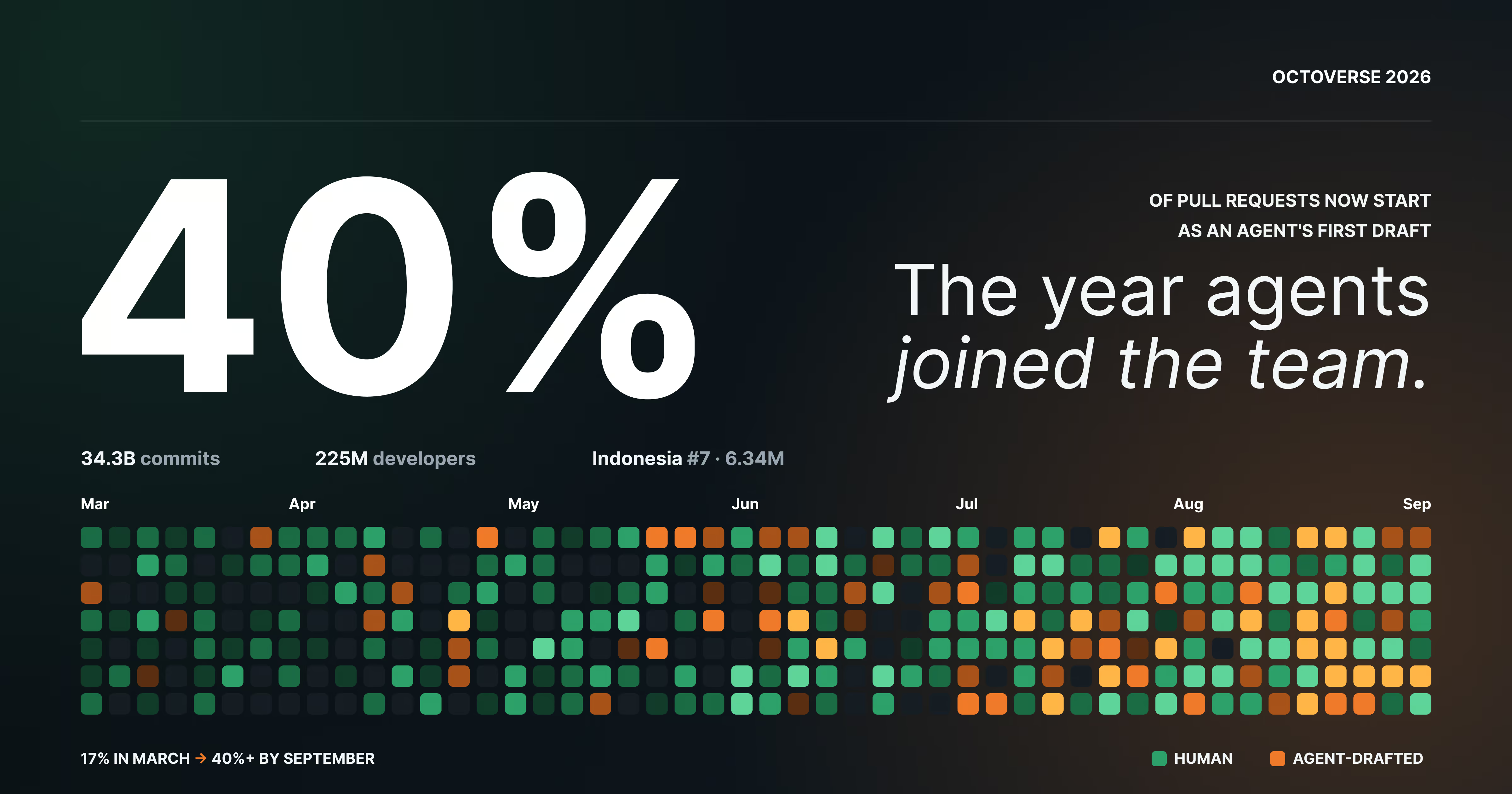
Octoverse 2026: Commits Hit Record Highs as Developers Build with Agents
GitHub's Octoverse 2026 counted 34.3 billion commits and found that over 40% of pull requests now start as an agent's draft. Here is what the numbers mean, and what they mean for you as a developer.
Read article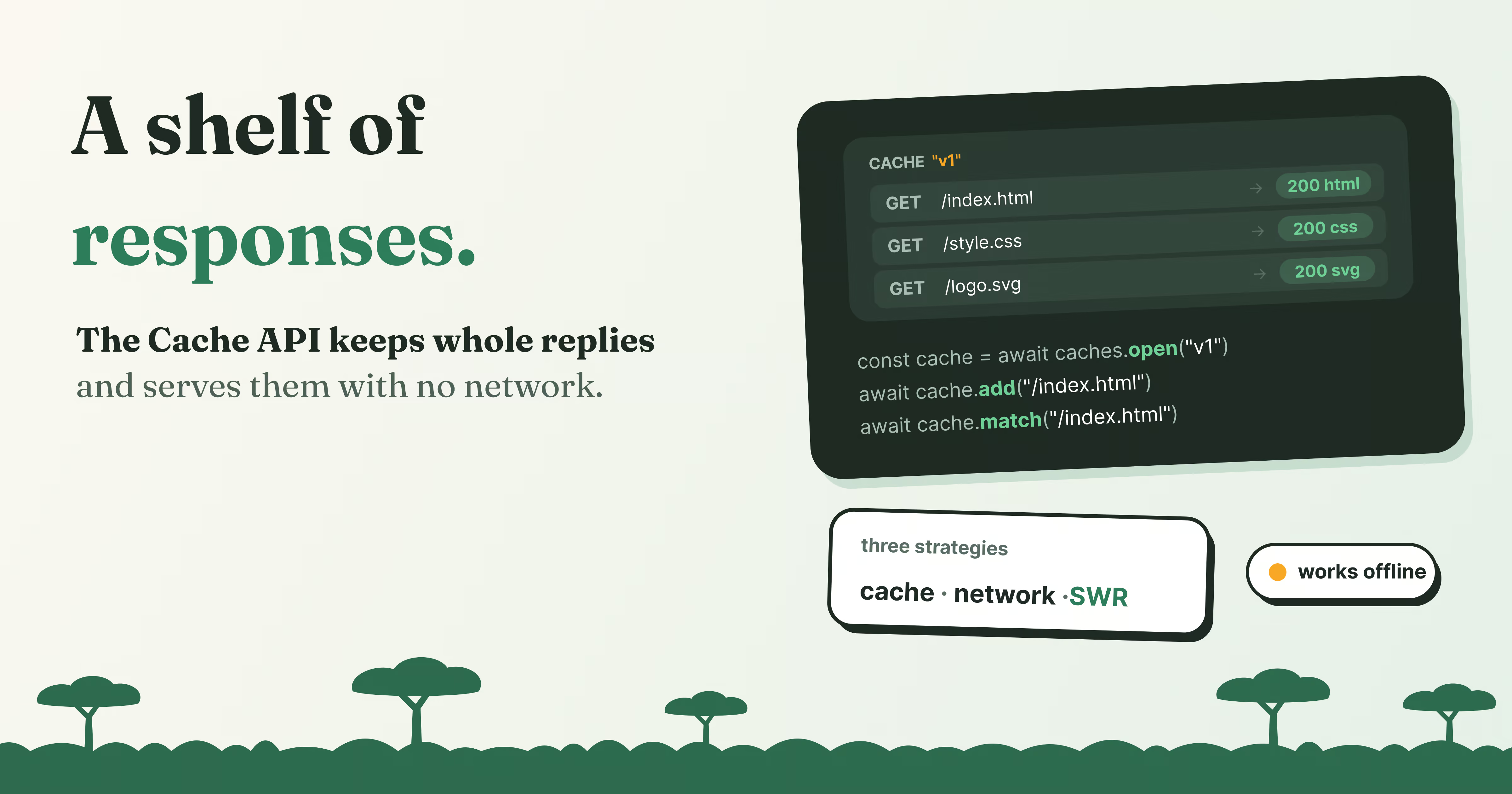 8 min
What Is Cache Storage? The Cache API Explained
Cache Storage keeps whole requests and responses in the browser. Learn the Cache API, how offline sites use it, and cache-first vs network-first, live.
Read article 8 min
What Is localStorage? Save Data in the Browser
Learn how localStorage works, with a live lab on your own browser: setItem and getItem, why everything becomes a string, JSON, limits, and storage events.
Read article
Discussion
Comments
Loading comments…